
In the previous post, we discussed the payoff profile for forwards. In this post, we look at the payoff profiles for options.
Downside
Compare the payoff profile of forwards to the payoff profiles for options. Unlike a forward, there is only a limited downside with option contracts. An option gives its owner the right to exercise but not the obligation to perform if the exercise would result in a loss. For that additional protection, there is a price and it is charged upfront as a premium.
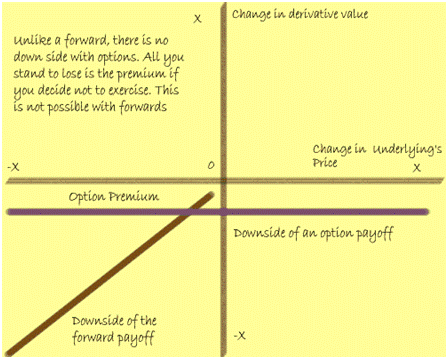
Payoff profile of a call & put option
Once again, a Call option gives it owner the right to buy the underlying at a price and time agreed upon the date of purchase of the option contract. A Put option gives it owner the right to sell the underlying at a price and time agreed upon the date of purchase of the option contract.
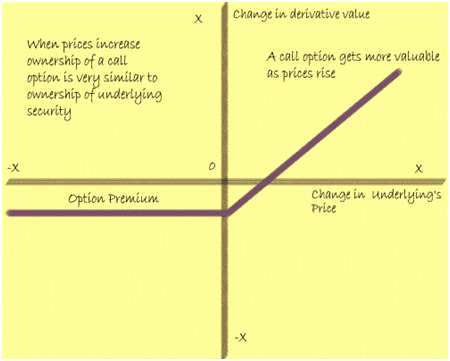
A Call option is a bullish instrument. You purchase it when you expect prices to rise and want to benefit from that rise. As you can see in the payoff diagram above the value of call option increases when prices rise but the downside when prices fall is limited to the premium lost when the option is not exercised.
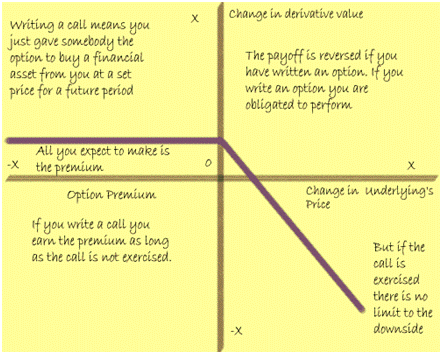
Unlike the buyer of a call, the seller of a call is under an obligation to perform. His upside is the premium that he retains when the call option is not exercised; his downside is the direct inverse of the payoff profile of the buyer of the call.
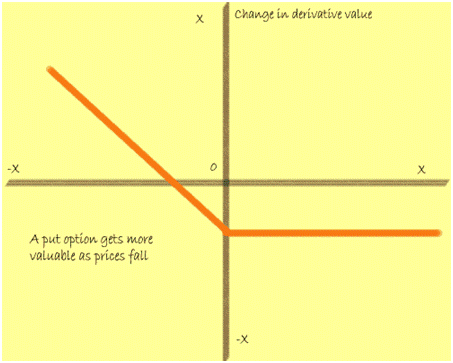
The same rules hold true for the buyer and seller of the put option as shown in the next two diagrams.
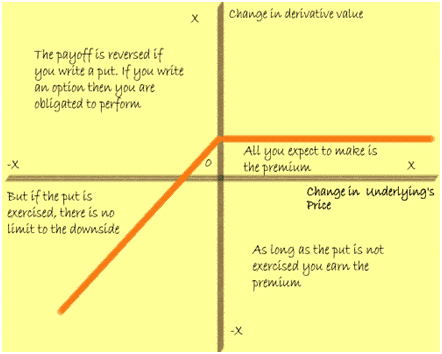
The following table summarizes and reviews the above concepts:
| Product | Position | Translation | Downside |
| Call | Long | Bought – Owns the option | Premium paid |
| Call | Short | Sold – Wrote the option | If the option is exercised, the difference between Market price and Strike price |
| Put | Long | Bought – Owns the option | Premium paid |
| Put | Short | Sold – Wrote the option | If the option is exercised, the difference between Strike price and Market price |
| Forward | Long | Bought the underlying | The difference between Forward price and Market price, if prices decline |
| Forward | Short | Sold the underlying | The difference between Market price and forward price, if prices rise |
Comments are closed.