
A working example of effective duration calculation. Earlier we had reviewed the calculation process for Macaulay and Modified Duration. In this post we will focus on the steps for calculating Effective Duration.
Effective Duration
Effective Duration is calculated using the following formula:
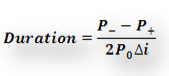
Where,
Δi= change in yield = 1%
P0= Initial Price
P+= Price if yields increase by Δi
P-= Price if yields decline by Δi
We are calculating the effective duration of the sample instrument on the issue date. Therefore P0 is equal to the price calculated above, i.e. 98.1666.
To calculate P+ we use the same methodology for calculating the initial price but assume that the YTM has increased by 1% to 13%.
The present values of cash flows are as follows:
| Tenor (in years) |
t | Cash Flow | PV of Cash Flow |
| 0.5 | 1 | 5 | 4.6948 |
| 1 | 2 | 105 | 92.5742 |
| P+=PVTCF= | 97.2691 |
To calculate P- we use the same methodology for calculating the initial price but assume that the YTM has decreased by 1% to 11%.
The present values of cash flows are as follows:
| Tenor (in years) |
t | Cash Flow | PV of Cash Flow |
| 0.5 | 1 | 5 | 4.7393 |
| 1 | 2 | 105 | 94.3375 |
| P-=PVTCF= | 99.0768 |
Effective Duration = (99.0768-97.2691)/(2*98.1666*1%) = 0.9208
We have reviewed the step by step process for calculating Effective Duration. In the next post we will see how Effective Convexity is calculated. We will also look at how these two metrics are combined to derive how sensitive the sample instrument is to changes in interest rates.


| Premium Courses |


